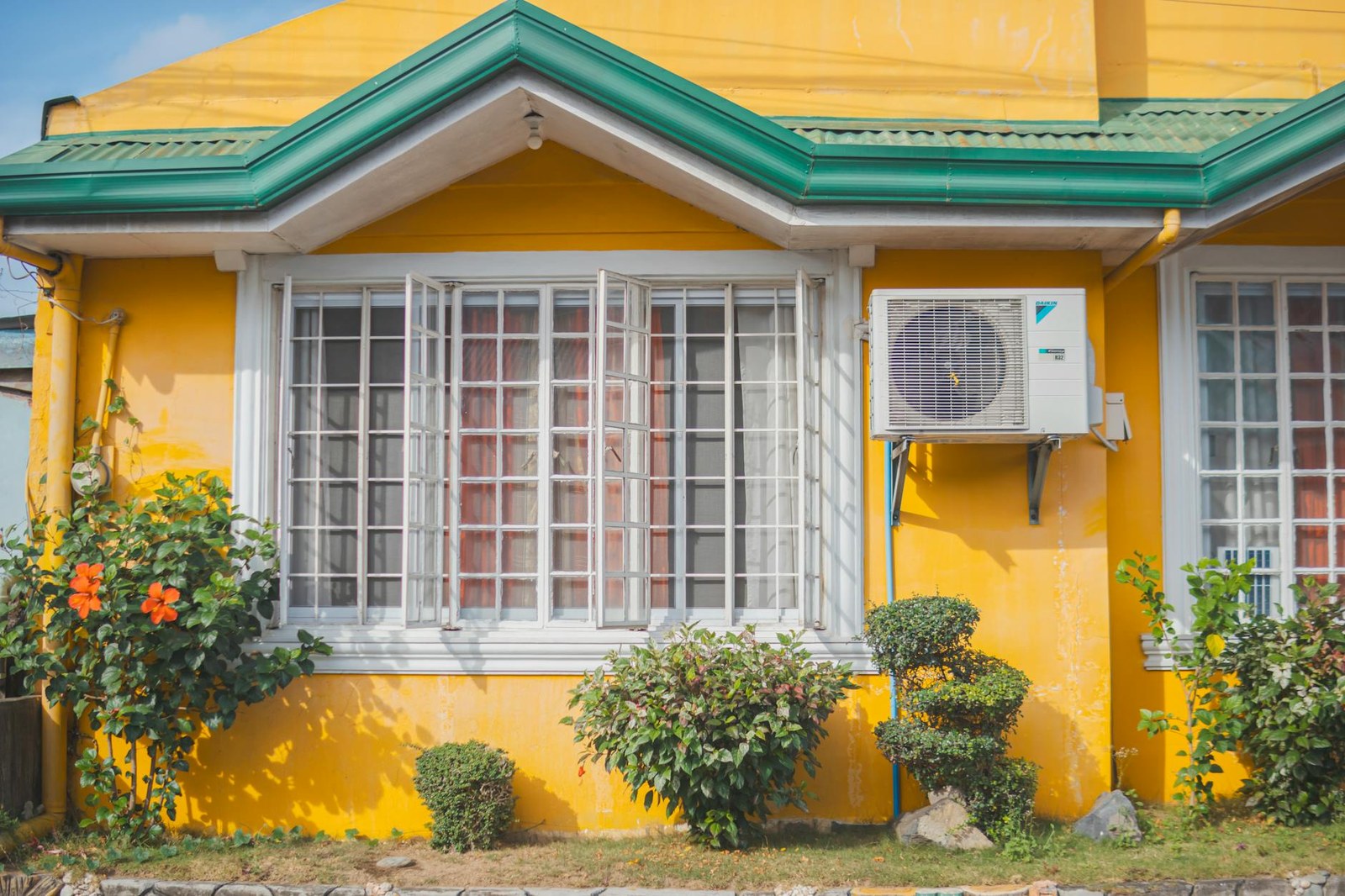
Where to Put the Outdoor Unit: Clearance, Airflow & Noise (Adelaide Guide)
The honest answer: outdoor unit placement is the single most under-spent five minutes on a typical split system installation, and it’s the decision that determines whether your aircon delivers 15 years of clean operation or 7 years of underperformance, noise complaints and early coil failure. The manufacturer clearance specs are not suggestions. The AS 1055 noise limits are not suggestions. The afternoon-sun problem on west-facing walls is not theoretical. And the five “quick fixes” cowboy installers use to save 20 minutes on placement will cost you 8 years of unit life.
This guide walks through what the manufacturer install manuals actually say, why airflow recirculation kills efficiency, the Adelaide-specific solar gain maths, the noise compliance rules, and the placement traps that show up after 3–5 years.
The 5 minutes most installers don’t spend (and why it ruins your aircon)
Five minutes. That’s how long a thoughtful placement assessment takes — walking the proposed install location with a tape measure and the manufacturer install manual on a tablet. Check the clearances against spec, look at the line-of-sight airflow path, note the afternoon-sun exposure, measure noise distance to the neighbour boundary, plan the line-set route and drainage fall.
The common cowboy version: pick the easiest wall, drill the penetration on the line of the indoor head, mount a bracket, hang the unit. Twenty minutes. No tape measure, no manual, no thought.
The difference shows up at year 3 — when the recirculating exhaust has been running the compressor 25% harder than it should, and at year 7 when the unit packs up two-thirds of the way through its rated 12-year life.
The five-minute placement assessment is where good installers separate from cowboys. It’s also why a quote that’s $300 above another quote often represents better value — that $300 is paying for the time to do this properly. The ARC-licensed installers we match against quote requests do this assessment as standard.
Manufacturer clearance specs — 30cm sides, 60cm front, 1m above
Every manufacturer publishes install clearance specs in the unit’s install manual. They’re not suggestions; they’re engineering minimums based on heat-rejection airflow at full load.
The common floor across Daikin, Mitsubishi Electric, Fujitsu and Samsung residential outdoor units:
| Direction | Clearance |
|---|---|
| Sides (left and right) | 300mm minimum |
| Rear (intake side) | 200–300mm minimum |
| Front (discharge fan) | 600mm minimum, 1500mm preferred |
| Above (top) | 1000mm minimum |
| Below (ground/floor) | 100–200mm (raised on feet or mount) |
Some larger ducted outdoor units (10kW+, multi-head 5+ heads) require 500mm sides and 2000mm front discharge clearance. Always check the specific model manual.
The reason for the specs: outdoor units reject heat by drawing ambient air across the condenser coil and discharging it out the front. If the discharge air re-enters the intake (recirculation), the unit is now drawing in 50°C exhaust instead of 35°C ambient — and the cooling capacity drops by 15–25% while the compressor draws 20–30% more power. Recirculation is the silent killer of split-system efficiency.
The bigger 60cm front clearance matters most. The unit needs an unobstructed line of fan discharge to dump the exhaust into open air. A unit pointed at a wall 30cm in front of the fan is recirculating roughly half its exhaust. Get it wrong and you’ll be calling the installer back in year 3 wondering why the system can’t keep up.
Airflow recirculation — why a corner mount kills efficiency by 20%
The two airflow traps to avoid:
Corner mount. Outdoor unit fitted in a 90-degree corner with the fan pointed into the corner. The exhaust hits the perpendicular wall, deflects, and re-enters the side intakes. Recirculation level: severe. Efficiency loss: 20–25%. Common in narrow side passages where the installer didn’t want to trench the line-set further down the wall.
Eave / pergola box. Outdoor unit fitted in an enclosed eave or under a pergola roof — looks tidy, hides the unit. But the warm exhaust gets trapped under the eave and recirculates. Roof void heat plus exhaust heat means the unit is effectively running in a 50°C ambient, even when the actual outdoor air is 35°C. Compressor runs hot, coil ices in winter, life-shortens by 30%+.
The fix in both cases: pick a different wall, even if it costs an extra 4m of line-set ($80–$160 of copper pipe and lagging). The total install cost is $30 lower with the corner mount; the running cost is $200/year higher and the unit dies 4 years earlier. Bad trade.
The AS-validated test: stand in front of the proposed location, fan discharge pointing at you. Look up. If you see eave or pergola or another wall within 1m of the discharge path, find another spot. Look down. If you see a planter box, garden bed or fence within 60cm, find another spot. If you’re planning a landscape refresh in the same season, get a parallel quote for Adelaide landscaping and outdoor projects — paving, planting, and the unit’s clearance envelope all interact and the integrated plan is cheaper than retrofit.
Sun exposure on the condenser — Adelaide afternoon west-facing math
Adelaide afternoon sun (west-facing walls 1pm–7pm in summer) hits 1,000 W/m² on a clear day. Add 41°C ambient to direct solar gain on a black-painted condenser cabinet, and the metal surface temperature hits 65–70°C. The condenser coil sits inside that hot cabinet trying to dump heat into ambient — and “ambient” is now effectively 50°C.
The result: the unit runs at full compressor speed all afternoon, the rated cooling capacity drops 20–25%, and the room can’t reach setpoint while the meter spins.
The Adelaide rule: avoid west-facing outdoor unit placement where possible. The wall preference order for an Adelaide split:
- South-facing — best. No direct summer sun, mild winter sun. Optimal.
- East-facing — good. Morning sun only; cooled by midday in summer.
- North-facing — workable. 6+ hours of sun in summer, but mid-day sun is high-angle (above the unit) so direct coil exposure is moderate.
- West-facing — worst. Afternoon sun hits the unit at peak ambient. Avoid if any other wall works.
If west-facing is the only option (terraced house, side-passage layout), fit a louvred shade hood. Aluminium louvred hoods cost $180–$320 fitted, drop the cabinet temperature by 10–15°C, and recover most of the lost capacity. Don’t use a solid board — that traps the discharge airflow, recirculation problem all over again. Louvres only.
Drainage fall — line-set falls 1° per metre or you get gurgling
The condensate drain line — the small clear tube running from the indoor head out to a downpipe or garden — must fall continuously at roughly 1° per metre (about 17mm per metre). Any flat or back-falling section traps water, breeds biofilm, and gurgles when the system runs.
The classic cowboy install: line-set covered in white trunking, runs across the wall, drops to the ground via a lazy curve. The condensate drain inside the trunking has a back-fall section because the trunking was levelled flat. Three months later the customer hears gurgling, finds water dripping down the wall, calls back. The fix is a $200 service call to re-route the drain.
The proper install: drain run laid first with a continuous fall, line-set (refrigerant pipes) bundled with the drain, all dressed neatly in trunking that follows the natural fall. Five extra minutes during install, zero callbacks.
Same logic on the refrigerant line-set fall. The liquid line should fall continuously from indoor to outdoor — uphill runs trap liquid refrigerant and reduce capacity. Where the outdoor unit is below the indoor head (ground-level mount on a wall-mount split in a single-storey home), the geometry works naturally. Where the outdoor sits on a roof or eave above the indoor (rare in residential, common on commercial), the design needs an oil trap loop every 3m of vertical rise.
Acoustic compliance — AS 1055 limits and where the unit can sit by night
AS 1055 — Acoustics — Description and measurement of environmental noise is the Australian Standard governing residential noise from fixed plant including aircon outdoor units.
The Adelaide residential noise floor:
- Daytime (7am–10pm): 45 dB(A) at the receiving boundary
- Night (10pm–7am): 35 dB(A) at the receiving boundary
A typical 7kW residential split outdoor unit runs at 48–55 dB(A) measured 1m from the unit. To meet the night-time 35 dB(A) limit at the neighbour boundary, you need:
- 3–5m setback from the boundary (each doubling of distance drops sound pressure by 6 dB)
- Or a sound-reducing fence (1.8m close-boarded fence drops 6–8 dB)
- Or both
The placement implication: don’t fit the outdoor unit within 3m of the neighbour boundary on the side where bedrooms back onto the fence. Don’t fit it within 2m of your own master bedroom window.
If your only viable wall is close to the boundary, two mitigations help. First, the quietest brand options — Daikin Cora runs at 48dB outdoor on low fan, the quietest residential split on the market. Second, an acoustic enclosure or fence panel between the unit and the boundary, which can drop another 4–6 dB.
Council enforcement is real. SA councils respond to noise complaints, send environmental health officers to measure, and issue noise abatement notices that can require the unit to be relocated or quieted. The cost of getting it wrong is typically $1,500–$3,500 to relocate, plus pipe re-routing.
Pet, plant and pool placement traps (chlorine vapour kills aluminium fins)
Three subtler placement traps:
Pets. Cats love sitting on warm outdoor units. Some dogs urinate on them — and dog urine has enough ammonia to corrode aluminium fins over time. Mount the unit on a wall bracket 700–900mm above ground or on a raised plinth where pets can’t easily access it.
Plants. Climbing vines, jasmine, ivy, fast-growing shrubs — they’ll grow into the fan blade, restrict airflow, and require service callouts to clear. Maintain a 1m radius of plant-free clearance around the unit. The corollary: don’t fit the unit in front of an established hedge that you’d then have to cut back.
Pools. Chlorine vapour off a chlorinated pool is the single most aggressive corrosion environment a residential outdoor unit will see. Aluminium fins corrode in 4–6 years instead of 12–15. The minimum setback from a pool waterline is 2m, and units within 4–5m should be coastal-rated regardless of distance from the actual coast. Saltwater pools are less aggressive than chlorinated but still require the upgraded coil treatment. We cover the coastal-rated coils detail in a separate article.
The five “quick fixes” cowboys use that you’ll regret in 5 years
Five placement shortcuts to spot in a quote and push back on:
One — wall-mount bracket on plasterboard with no stud detection. Outdoor unit weighs 25–55 kg. Plasterboard alone won’t hold it; cracked plasterboard at year 3 is the early warning. Brackets must hit timber studs or masonry — every time.
Two — line-set covered with corrugated black ag-line instead of proper PVC trunking. Looks tidy from 5m away, ages badly. Ag-line UV-degrades in 2–3 years and falls apart. Proper trunking is $30 more and lasts the life of the unit.
Three — drainage into a garden bed with no fall. Condensate water pools, breeds mosquitoes, attracts vermin. Drain into a downpipe or a soak-away pit, not bare soil.
Four — outdoor unit mounted directly on the ground without a pad or feet. Water pools under the unit, the base rusts through in 4–5 years. A $40 concrete pad and rubber anti-vibration feet add 5+ years to the cabinet life.
Five — no isolator switch within 1m of the outdoor unit. Required by AS/NZS 3000 (Wiring Rules) — the unit must be electrically isolatable for service work. A cowboy who skips the isolator is also probably skipping other compliance, and the next sparky who has to service the unit will charge an extra $200 to fit one before they touch the work.
This is also why we recommend going through the Marion split system installation page for installs in the southern suburbs — trusted matched installers are vetted on these compliance details specifically.
When to call us
If you’re sitting on more than one quote and they show wildly different placement choices — one on the west wall, one on the south wall, one on a bracketed eave — that’s exactly the kind of judgement call worth a fourth opinion. Submit the quote form — we’ll connect you with the trusted ARC-licensed installer who does the 5-minute placement assessment as standard, and you’ll see the same wall recommended on all a written quote if the engineering is right.
Frequently asked questions
How much clearance does a split-system outdoor unit really need? Manufacturer specs vary slightly but the common floor is 30cm from sides and rear, 60cm in front of the fan discharge, 1m above. Daikin and Mitsubishi spec these in their install manuals. Less than that and the unit recirculates its own hot exhaust air, killing efficiency by 15–25%.
Can I put the outdoor unit on a north-facing wall in Adelaide? Yes, but the western afternoon sun is the worse position. North-facing in Adelaide gets 6+ hours of direct sun in summer, hitting the condenser coil at peak ambient. Add a louvred shade hood or move to east/south-facing if the wall layout allows. South-facing is the optimum where possible.
How loud is too loud — what’s the legal noise limit? Adelaide residential noise limits under AS 1055 are 45dB(A) at the boundary during the day, 35dB(A) at night. Most modern split outdoors run 48–55dB(A) at the unit, so you need 3–5m setback or a noise-reducing fence. Council can issue noise abatement notices on non-compliant installs.
Can the unit sit on a concrete pad on the ground? Yes — a 600×400mm concrete pad with rubber anti-vibration feet is the standard ground-mount. Wall-mount on brackets is also common; the choice usually comes down to garden layout, ground access, and whether the home has adequate wall structure. Both are equally valid if installed correctly.
Will the salt air from a pool corrode the outdoor unit? Chlorine vapour from a chlorinated pool is more aggressive on aluminium fins than salt air. Don’t site the outdoor unit within 2m of the pool waterline or directly downwind of the chlorinator outlet. Saltwater pools are slightly less aggressive than chlorine but still require coastal-rated coils on units within 4–5m.
What’s the worst place to put an outdoor unit? Inside an enclosed eave or pergola box where the hot exhaust recirculates, against a west-facing wall with no shade, directly under a master bedroom window, on a flimsy wall-mount bracket on plasterboard-only stud, or within 1m of a pool chlorinator. We’ve seen all five — and they all kill the unit early.
Ready for a free, written quote from installers who get placement right?
Submit the quote form — the trusted ARC-licensed Adelaide installer, all running the 5-minute placement assessment as standard. Fast turnaround, no obligation.