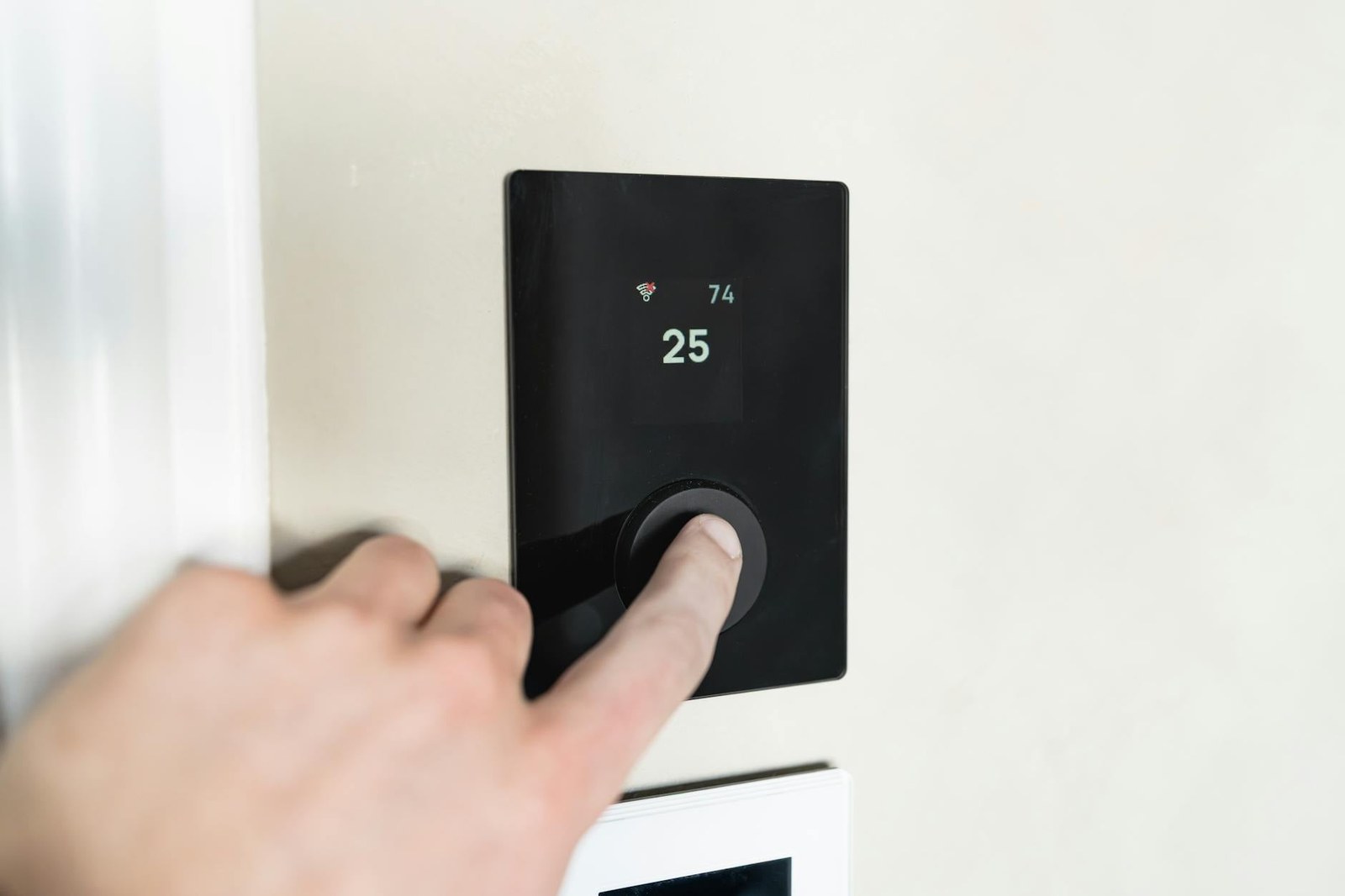
Smart Thermostats & Wi-Fi Controllers: What Adelaide Aircon Buyers Should Know
The honest answer for most ducted heating and cooling buyers in 2026: yes, get the smart Wi-Fi controller — but spend more time choosing which one than on whether to have one. The three leading platforms — Daikin AirHub, Mitsubishi MELCloud, Fujitsu Anywair — all do the basics well (remote control, scheduling, geofencing, voice integration). The real differences show up in per-zone temperature control, demand-response participation, multi-system management, and how badly each one’s app design has aged. The wrong controller becomes an operational annoyance every day for the next 12 years; the right one disappears into the background and saves you 15% on bills.
This guide walks through what smart controllers actually do, the three Adelaide-relevant platforms compared, where the rebates sit, and when not to bother with the upgrade.
What “smart thermostat” actually means — and what it doesn’t
A smart thermostat is a network-connected aircon controller that adds three layers of capability over a manual wall controller:
One — remote control. App on your phone, control from anywhere with internet. Turn the aircon on from the office before you drive home, check the indoor temperature, change setpoints from bed.
Two — scheduling and learning. Set a weekday schedule and a weekend schedule. Some controllers also learn occupancy patterns — when you typically arrive home, when you leave, when the bedroom thermostat gets adjusted overnight — and pre-condition the rooms accordingly.
Three — geofencing and integration. Auto-detect when the household phones leave the geofence (you’ve gone out) and ramp the system back. Resume normal operation when the phones return. Hub integration with Google Home, Amazon Alexa, Apple HomeKit, Samsung SmartThings.
What a smart thermostat is NOT:
- A magic energy-saver. The 8–18% running-cost saving comes from schedule discipline and per-zone control, not from the device itself.
- A replacement for a properly-sized system. A smart controller on an undersized 12kW outdoor doesn’t fix the sizing problem.
- A guarantee of comfort. The thermostat reads the room it’s in; if that room isn’t representative of the rest of the house, the rest of the house is uncomfortable.
- A long-term reliable platform. App support varies; some brands have abandoned controllers within 5 years. Choose a brand with stable platform support.
Daikin AirHub vs Mitsubishi MELCloud vs Fujitsu Anywair — controller showdown
The three platforms that dominate the Adelaide market.
Daikin AirHub. The newest of the three, launched 2023, replacing the older Daikin Mobile Controller. Best-in-class app design, fastest response time on the network, native HomeKit support, full per-zone temperature control on ducted systems. Works across the Daikin product line back to 2018. Retrofit kit on older Daikin: $350–$550. Verdict: the cleanest pick for new Daikin installs.
Mitsubishi MELCloud. Mitsubishi Electric’s app platform — five years old, very mature, used worldwide. Strong scheduling and geofencing, integrates with Google Home and Alexa cleanly. Per-zone temperature control on the Pro tier. Lacks the design polish of AirHub but the underlying platform is reliable. Retrofit on older Mitsubishi: $300–$500. Verdict: the dependable pick.
Fujitsu Anywair. Three-year-old platform, mid-range app polish, strong scheduling and basic geofencing. Per-zone control on the Anywair Plus tier. Smaller integration ecosystem (Google Home and Alexa supported, HomeKit and SmartThings not yet). Retrofit on older Fujitsu: $250–$450. Verdict: solid value, slightly less feature-complete.
Honourable mentions: Samsung SmartThings (best smart-home integration of any brand, but Samsung’s residential ducted presence in Adelaide is thin), Sensibo / Tado (third-party retrofit controllers that work across brands but lose the manufacturer-specific zone integration), Honeywell EvoHome (premium-tier whole-home zone management; rare in Australian residential).
The brand-by-brand picture lines up with the broader brand comparison — Daikin leads on polish, Mitsubishi on reliability, Fujitsu on value, Samsung on smart-home integration.
Wi-Fi-only vs full home automation (Google Home, Alexa, Apple HomeKit)
Three integration tiers to be aware of:
Wi-Fi-only. App-based control on the manufacturer’s app, no third-party integration. Works fine for solo users; struggles for households with multiple smart-home platforms.
Voice-assistant integration. Google Home, Amazon Alexa support. “Hey Google, turn on the lounge aircon to 22 degrees.” Useful in practice, particularly for kitchen and laundry use where touch controls are awkward. All three major platforms support this.
Full home-automation hub. Apple HomeKit, Samsung SmartThings, Home Assistant. Lets you build automations across multiple devices — “When the front door unlocks after 5pm and the temperature is above 30°C, turn on the lounge aircon to 23°C.” Daikin AirHub does HomeKit natively; MELCloud is HomeKit-bridged; Fujitsu doesn’t support HomeKit yet.
The decision rule: if your household runs Apple devices and HomeKit, lean Daikin AirHub. If you run Google ecosystem and Google Home, any of the three works. If you run Samsung TVs and SmartThings, Samsung’s own platform is the cleanest pick.
Per-zone smart control on ducted systems (the killer feature)
This is the single biggest differentiator on a multi-zone ducted reverse cycle system. With per-zone smart control, each zone has its own thermostat sensor and setpoint. The bedroom can run at 19°C overnight while the kitchen-living runs at 23°C in the morning. The controller balances airflow across zones, prioritises calling zones, and shuts off zones that are at setpoint.
Without per-zone smart control:
- One thermostat (usually in the kitchen-living) controls the whole system
- All zones run at the same setpoint or are simply open/closed
- The bedroom either gets the same temperature as the kitchen or no conditioning at all
- Scheduling is system-wide, not per-zone
With per-zone smart control:
- Each zone has its own setpoint
- Schedule per zone (master bedroom 19°C 10pm–6am, then off; kitchen 22°C 6am–10am)
- Geofencing pre-conditions only the zones you typically use first
- Running costs drop 8–15% from the per-zone optimisation alone
The per-zone tier is typically $200–$400 above the basic Wi-Fi controller. On a 4+ zone system, it’s worth the upgrade. On a 1–2 zone system, the gain is smaller.
Geofencing & schedule learning — how much they actually save
The two software features that turn a smart controller from a remote-control toy into an actual savings tool.
Geofencing. The phones in the household carry a virtual fence around your home. When all phones leave (everyone’s out), the system ramps to a setback temperature (28°C cooling / 16°C heating). When the first phone re-enters the fence, the system pre-conditions back to comfort setpoint. Typical saving: 8–12% on running costs for households with regular out-of-home time during the day.
Schedule learning. The controller observes how the household actually uses the system over 4–6 weeks — when setpoints get adjusted, when zones get turned on or off, what time the bedroom gets cooled overnight. It then suggests an optimised schedule and runs the system accordingly. Typical saving: 5–10% beyond manual scheduling.
Combined, geofencing + schedule learning typically deliver 12–20% running-cost saving on a household that didn’t previously run a tight schedule. Pure value-add — the controller pays itself back on this alone within 18 months on a typical Adelaide ducted heating and cooling systems prices install.
SA Power Networks demand-response — when smart controllers earn rebates
The demand-response programme is one of the under-marketed wins of smart controllers. SA Power Networks runs a demand-response programme that pays households to participate in brief grid-stress events.
How it works: during peak demand events (typically 6–10 events per summer, mostly January–February afternoons when SA grid demand spikes), SA Power Networks signals participating smart controllers to ramp the aircon back by 1–2°C for 60–90 minutes. The household barely notices; the grid stays stable; the household earns a rebate.
Rebate value: $80–$200 per summer depending on event participation and system size. Larger ducted systems (8kW+ outdoor) earn more.
Who’s eligible: ducted reverse cycle aircons with smart Wi-Fi controllers that integrate with the demand-response API. Currently Daikin AirHub, Mitsubishi MELCloud Pro, and some larger Fujitsu installs.
Sign-up: through your retailer (AGL, Origin, Engie, Diamond Energy all offer demand-response participation) or directly with SA Power Networks for residential premium customers.
The rebate doesn’t transform the economics, but it’s a real $80–$200 per year for accepting a barely-noticeable comfort impact 6–10 times a year. Worth signing up for.
The privacy trade-off — what data the controller collects
Smart controllers collect:
- Run-time and setpoint history (every adjustment timestamped)
- Indoor temperature readings from each thermostat sensor
- Geofencing data — phone GPS positions relative to the home (if enabled)
- App login times and sessions
- Voice command history (if voice integration enabled)
- Manufacturer firmware diagnostics
The data goes to the manufacturer’s cloud, gets aggregated for product analytics, and sits in your account history for 1–3 years. Major manufacturers (Daikin, Mitsubishi, Fujitsu) anonymise and don’t sell the data. Smaller brands and third-party retrofit controllers (Sensibo, Tado) have variable privacy policies — read before installing.
If the privacy side matters to your household, three mitigations: disable geofencing (kills one use case but eliminates location data), run scheduling locally rather than via the cloud where possible, and choose a major-brand platform over a third-party retrofit. Home Assistant integration is the cleanest privacy-respecting setup but it’s a 4–8 hour setup project.
For most Adelaide buyers, the privacy concern is real but moderate — equivalent to other connected-device categories. Worth being aware of, not worth declining the controller over.
When NOT to upgrade (rentals, simple split-system bedrooms)
Three cases where smart controllers don’t pay back:
Rental investment property. Tenant pays the bill, owner pays the controller. The economics don’t work for the owner. Stick with the basic controller.
Single-room split system in a bedroom or studio. One zone, one room, no scheduling complexity worth the controller. The basic remote does the job.
Holiday cabin with low duty cycle. Total run-hours under 200 per year. Smart controller savings on 200 hours don’t recover the upgrade cost.
For everything else — main residence, ducted, multi-zone, regular daily use — the smart controller is a clear yes. The only remaining decision is which platform.
When to call us
If you’re spec’ing a new ducted system and the smart-controller question hasn’t come up, submit the quote form. We’ll connect you with the trusted matched installer who’ll quote both the basic-controller and smart-controller options with detailed feature comparison. The right choice depends on your household’s existing smart-home setup and zone count.
Frequently asked questions
Does my new aircon come with Wi-Fi as standard? Most premium 2026 splits and ducteds ship with Wi-Fi capability as standard or as a $50–$150 dongle option. Mid-range and budget brands often charge $200–$350 for the Wi-Fi controller. Check the spec sheet — Wi-Fi-ready is not the same as Wi-Fi-included.
Will a smart thermostat actually save me money? Typically 8–18% on running costs through schedule learning, geofencing, and per-zone control. On a $2,000/year ducted bill, that’s $160–$360 per year. Payback on the $400–$800 controller upgrade is usually 18–36 months.
Can I retrofit Wi-Fi to my existing ducted system? Often yes — Daikin AirHub, Mitsubishi MELCloud and Fujitsu Anywair retrofit kits work on systems back to about 2014. Older systems (pre-2010) may need a more invasive controller swap. Cost is $250–$650 fitted depending on model.
Does SA Power Networks pay me for letting them control my aircon? Yes — under the demand-response programme, smart-controller-enabled aircons can earn rebates of $80–$200 per summer for accepting up to 10 brief curtailment events. Mostly relevant for ducted systems above 8kW.
What about privacy — does my aircon spy on me? Smart controllers collect run-time data, setpoint history, and geofencing location data (if enabled). Major-brand apps anonymise and aggregate; the privacy concern is real but moderate. If privacy is a priority, run the controller on a local schedule and disable geofencing.
Do I need a smart controller per zone or one for the whole system? One main controller handles the whole system. Per-zone smart sensors (small temperature/occupancy sensors in each zone) talk to the main controller and let it run different setpoints per zone. Cost is roughly $40–$80 per zone for the sensor.
Ready for a written, line-itemed smart-controller quote?
Submit the quote form — the trusted ARC-licensed Adelaide installer, all quoting smart-controller options alongside the system price. Fast turnaround, no obligation.