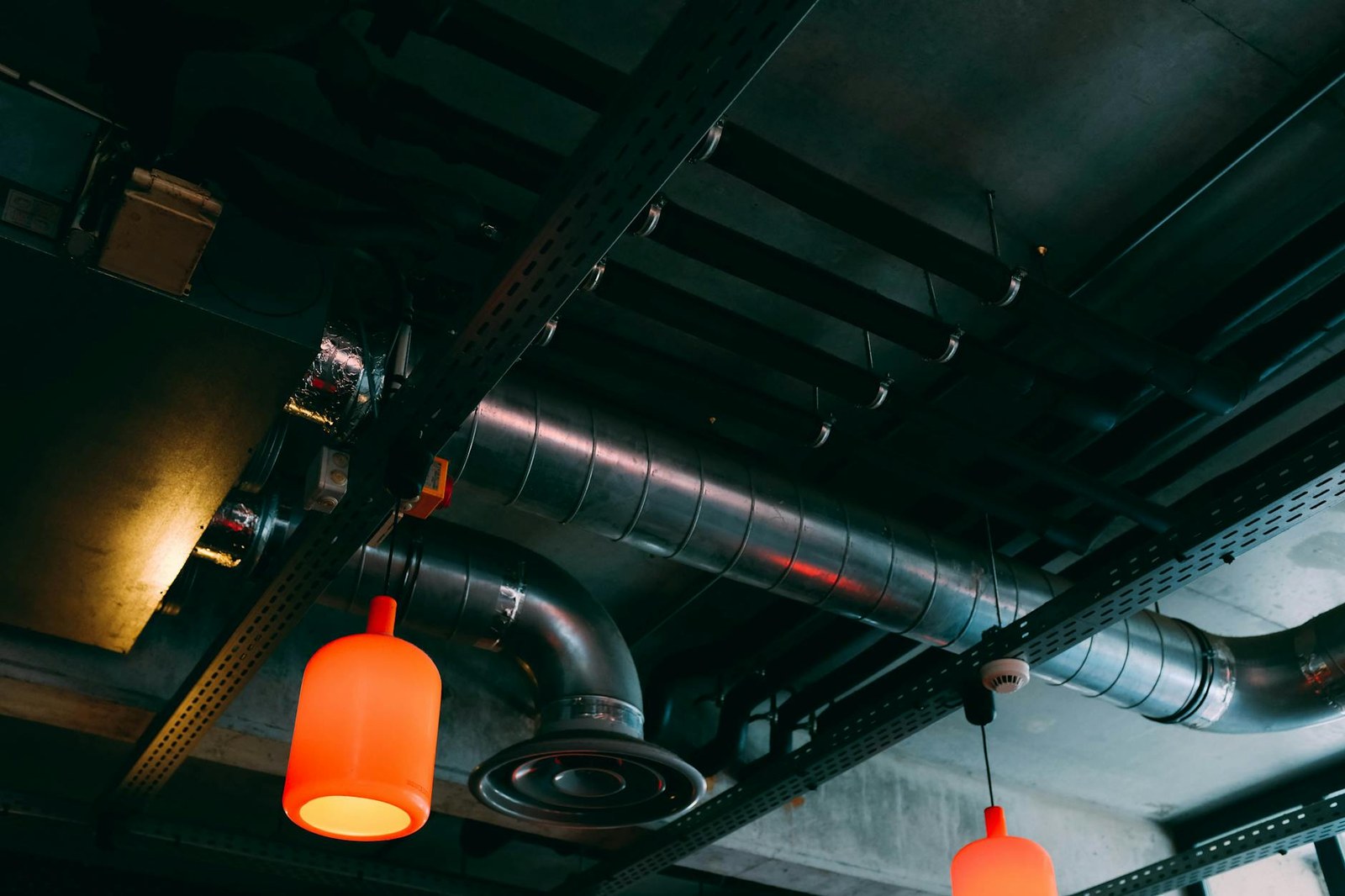
Australian Standards Behind a Safe Aircon Install
A compliant ducted air conditioning installation in Australia is governed by four Australian Standards working together: AS/NZS 5149 (refrigeration safety), AS 4254 (ductwork), AS/NZS 3000 (electrical), and AS/NZS 1668.2 (ventilation and indoor air quality). None of them is optional. A competent installer treats them as the floor below which the work cannot fall — and produces a commissioning sheet on handover that proves each one was met.
This guide explains what each standard covers in plain English, how to read a commissioning sheet, and the questions to ask at handover that confirm the install meets the ducted air conditioning installation standard. It pairs with the ARC licensing verification guide and the outdoor unit placement guide.
Why standards matter for $10k+ installs (and what fails when they’re skipped)
Standards exist because the failure modes are predictable. A ducted aircon that doesn’t meet AS 4254 sees 20–40% of its rated airflow lost to leaky duct joints, undersized takeoffs and crushed flexible runs — meaning the system runs longer, costs more to operate, and never quite cools the rooms it was specified to. A refrigerant install that doesn’t meet AS/NZS 5149 risks pressure-relief failure, refrigerant migration into occupied spaces, and (on R32 systems specifically) elevated flammability hazard.
Buyers who treat the standards as an installer-only concern often discover the cost three to five years in:
- The system that “doesn’t quite cool the back rooms” turns out to have leaked half its airflow into the ceiling void.
- The “intermittent fault” trip turns out to be a missing isolator or an undersized supply circuit.
- The “compressor failure at year four” turns out to be moisture in the refrigerant circuit because vacuum was skipped at install.
The standards aren’t theory. They’re the documentation of what tends to fail when corners are cut.
AS/NZS 5149 — refrigeration safety in plain English
AS/NZS 5149: Refrigerating Systems and Heat Pumps — Safety and Environmental Requirements is the master safety standard for refrigeration in Australia and New Zealand. It’s published in four parts:
- Part 1: Definitions, classification and selection criteria. What counts as low-, medium- and high-pressure refrigerant; classification of safety groups (A1, A2L, A3 by flammability and toxicity).
- Part 2: Design, construction, testing, marking and documentation. What goes onto a refrigeration nameplate, how pressure relief is sized, how systems are pressure-tested at install.
- Part 3: Installation site. Charge limits per occupied space (especially for R32 and other A2L refrigerants), ventilation requirements, exclusion zones.
- Part 4: Operation, maintenance, repair and recovery. What records must be kept, how recovery is performed, what triggers a major decommissioning.
For a residential split or ducted install, Part 3 (charge limits per room) is the part most homeowners benefit from understanding. R32 (the current residential refrigerant) is classed A2L — mildly flammable. AS/NZS 5149.3 sets a maximum allowable charge per occupied room based on room volume. A small bedroom can only have a refrigerant charge below a calculated threshold; install a system with too much charge in too small a room and the standard isn’t met.
A competent installer runs this calculation as part of system selection. If they didn’t, the system might be physically possible to fit but legally non-compliant. The Standards Australia register at standards.org.au lists the current edition.
AS 4254 — the ductwork standard that determines real-world airflow
AS 4254: Ductwork for Air-Handling Systems in Buildings is published in two parts:
- Part 1: Flexible duct. Construction, sealing, R-value of insulation, allowable bend radius, support spacing.
- Part 2: Rigid duct. Sheet metal construction, joint methods, hangers, support, leakage class.
For a typical Adelaide ducted residential install, AS 4254.1 is the load-bearing standard — most residential ducted systems use flexible duct between the indoor unit and the diffusers. The standard covers:
- R-value insulation rating — minimum R1.0 in Australian climate zone 5 (most of Adelaide), with higher requirements in cooler zones. Under-spec’d insulation means thermal losses to the roof void.
- Bend radius — flexible duct must be supported with the inner radius at least equal to the duct diameter. Tight crimps or kinks reduce airflow drastically.
- Support spacing — every 1.2 metres maximum on horizontal runs. Sagging duct becomes pooling water in summer condensation.
- Joint sealing — mastic and cable-tied at every connection. A poorly sealed joint loses 10–25% of airflow at the diffuser.
A common AS 4254 failure: takeoffs sized too small for the duct branch they feed, restricting airflow at the ceiling diffuser. The rooms furthest from the indoor unit feel under-cooled — not because the system is undersized, but because the airflow never reaches them.
AS/NZS 3000 — electrical safety and the isolator switch you can see
AS/NZS 3000: Electrical Installations (Wiring Rules) covers all fixed electrical installation in Australia. For an aircon install, the relevant requirements include:
- Dedicated circuit. A residential split system or ducted indoor unit needs its own circuit, sized to the unit’s rated current draw plus a margin. Sharing a circuit with general-purpose outlets is non-compliant.
- Isolator switch. Every aircon outdoor unit must have a visible, lockable isolator switch within line-of-sight of the unit, allowing safe service isolation. Typically mounted on the wall adjacent to the condenser.
- RCD protection. Residual-current device protection on the circuit (current AS/NZS 3000 default for residential).
- Earthing. Continuous earth from the consumer mains through to the unit chassis.
A Certificate of Electrical Compliance, lodged through the Office of the Technical Regulator (the OTR is the SA electrical safety regulator), is the documentary evidence that AS/NZS 3000 was met. The installer keeps the customer copy. No certificate, no compliant install — and the homeowner’s insurer will note the absence if a claim ever arises.
AS/NZS 1668.2 — ventilation and indoor air quality (often missed in retrofits)
AS/NZS 1668.2: Mechanical Ventilation in Buildings — The Use of Ventilation and Air-conditioning in Buildings governs indoor air quality and ventilation rates. For a residential aircon install it sets minimum fresh-air exchange rates and CO₂ targets, particularly relevant when:
- A ducted system is installed in a tightly-sealed modern home with limited natural ventilation.
- Multiple bedrooms share a ducted return air path with insufficient cross-ventilation.
- A heritage retrofit reduces natural air leakage to the point that the conditioned space accumulates CO₂.
In practice, AS/NZS 1668.2 is rarely the binding constraint on a residential install — most Australian homes have enough air leakage that the standard is met passively. It becomes more relevant in well-sealed Hills builds and CBD apartments, where mechanical ventilation may need to be added alongside the aircon. The outdoor unit placement guide covers the related airflow questions for the condenser side.
Sample install-completion checklist a competent installer signs off
A typical Adelaide ducted-install commissioning sheet covers:
- Refrigerant charge — weighed in to manufacturer spec, line-set length adjustment applied. AS/NZS 5149.3 charge-per-room calculation completed and documented.
- Vacuum — pulled to ≤500 microns, held for 15 minutes, decay test passed.
- Pressure test — high-side and low-side pressures recorded, superheat and subcooling within manufacturer tolerance.
- Ductwork — AS 4254.1 R-value confirmed, joints sealed, support spacing within 1.2 m, bend radius compliant.
- Diffuser airflow — measured at each ceiling diffuser, total within 10% of design airflow.
- Isolator switch — installed within line-of-sight of outdoor unit, lockable.
- Electrical compliance — Certificate of Electrical Compliance lodged with OTR, customer copy provided.
- Condensate drain — P-trap fitted, gravity flow tested, no pooling.
- Manufacturer commissioning — temperature differential at indoor coil within manufacturer spec (typically 12–14 K cooling, 18–22 K heating).
- Warranty registration — manufacturer warranty registered, customer warranty card and serial numbers handed over.
If the installer’s commissioning sheet doesn’t cover most of these items, the work probably wasn’t documented to standard. Ask for the commissioning sheet at handover, not weeks later.
Pressure tests, leak tests and commissioning paperwork — what to ask for at handover
The four documents a homeowner should receive at handover:
- Manufacturer’s commissioning sheet — refrigerant charge, pressures, temperatures, model and serial numbers. The brand uses this to register the warranty.
- Certificate of Electrical Compliance (CEC) — issued by the SA-licensed electrician who performed the electrical work. Lodged with the OTR.
- Refrigerant handling record — ARC licensee’s record of refrigerant added, system, date, licence number.
- Installer workmanship warranty document — the trading entity’s warranty terms in writing.
These four together are the audit trail for the install. The cost of producing them is part of a competent install. An installer who pushes back on providing them is signalling something. The same documentation discipline shows up across all regulated trades — sister trade-quote networks like Pool and Spa Quotes Adelaide and Tree Fox arborists apply equivalent paper-trail standards in their respective trades.
The Australian Institute of Refrigeration, Air Conditioning and Heating (AIRAH — airah.org.au) publishes industry technical handbooks that walk installers through commissioning best practice in detail.
What to do if you suspect a standard wasn’t followed on your install
Three pathways:
- Raise it with the installer. Most standards issues identified within the first 12 months are remedied at no cost — the installer has both the workmanship warranty and the reputation incentive to fix it.
- Independent inspection. An independent ARC-licensed tech can audit the install for $250–$450, producing a written report on standards compliance.
- Consumer and Business Services SA. If the installer disputes the issue, CBS SA (cbs.sa.gov.au) can mediate. CBS will often request the independent report as evidence.
The cost of remediation rises sharply with time. A duct insulation issue caught at six months is a half-day visit. The same issue caught at year three usually means lifting and re-running the duct — half a day becomes two days, and the cost reflects it.
Frequently asked questions
Are Australian Standards actually mandatory for aircon installs? Yes — most are referenced in the National Construction Code (NCC) or in state regulations. AS/NZS 3000 is mandatory under the Electricity Act 1996 (SA). AS/NZS 5149 is referenced in the federal Ozone Act regulations. AS 4254 is the industry-standard for ductwork and the basis for most Australian Building Codes Board guidance on ducted residential systems.
What’s the difference between AS/NZS 5149 and AS 4254? AS/NZS 5149 covers refrigeration safety — the refrigerant circuit, charge limits, recovery and pressure relief. AS 4254 covers ductwork — the air distribution side. A ducted reverse-cycle install is governed by both: AS/NZS 5149 for the refrigerant circuit between indoor coil and outdoor condenser, AS 4254 for the ducts between the indoor coil and the room diffusers.
How do I tell if my installer followed the standards? Ask for the commissioning sheet at handover. A standards-compliant install produces refrigerant charge weight, pressure-test results, vacuum decay test, airflow measurements at each diffuser, and a Certificate of Electrical Compliance. If those numbers aren’t on a commissioning sheet, the standards probably weren’t independently confirmed.
What’s a commissioning sheet and why should I get one? A commissioning sheet is the installer’s signed record of the install’s compliance with manufacturer specification and the Australian Standards. It documents the refrigerant charge, the operating pressures, the temperature differentials and the diffuser airflow. The brand uses it to register the warranty; the homeowner uses it as evidence of standards compliance.
What do I do if I think my install doesn’t meet code? Raise it with the installer first — most issues are remediated under workmanship warranty without formal escalation. If the installer disputes the issue, an independent ARC-licensed tech can audit the install ($250–$450) and produce a written report. CBS South Australia mediates disputes that don’t resolve at that level.
Does following the standard add to the cost of a ducted install? Marginally. The price difference between a standards-compliant install and a corner-cut install is typically 5–10% — driven mostly by the cost of properly insulated duct, properly sized takeoffs, and the time spent on commissioning. The lifetime cost difference (running cost, premature failure, warranty exposure) is much larger than the install premium.
Ready for a written quote from an installer who’ll show you the commissioning sheet?
Submit the quote form — the matched Adelaide installer commits in writing to producing the commissioning sheet, the Certificate of Electrical Compliance and the refrigerant handling record at handover. A written quote within one business day.