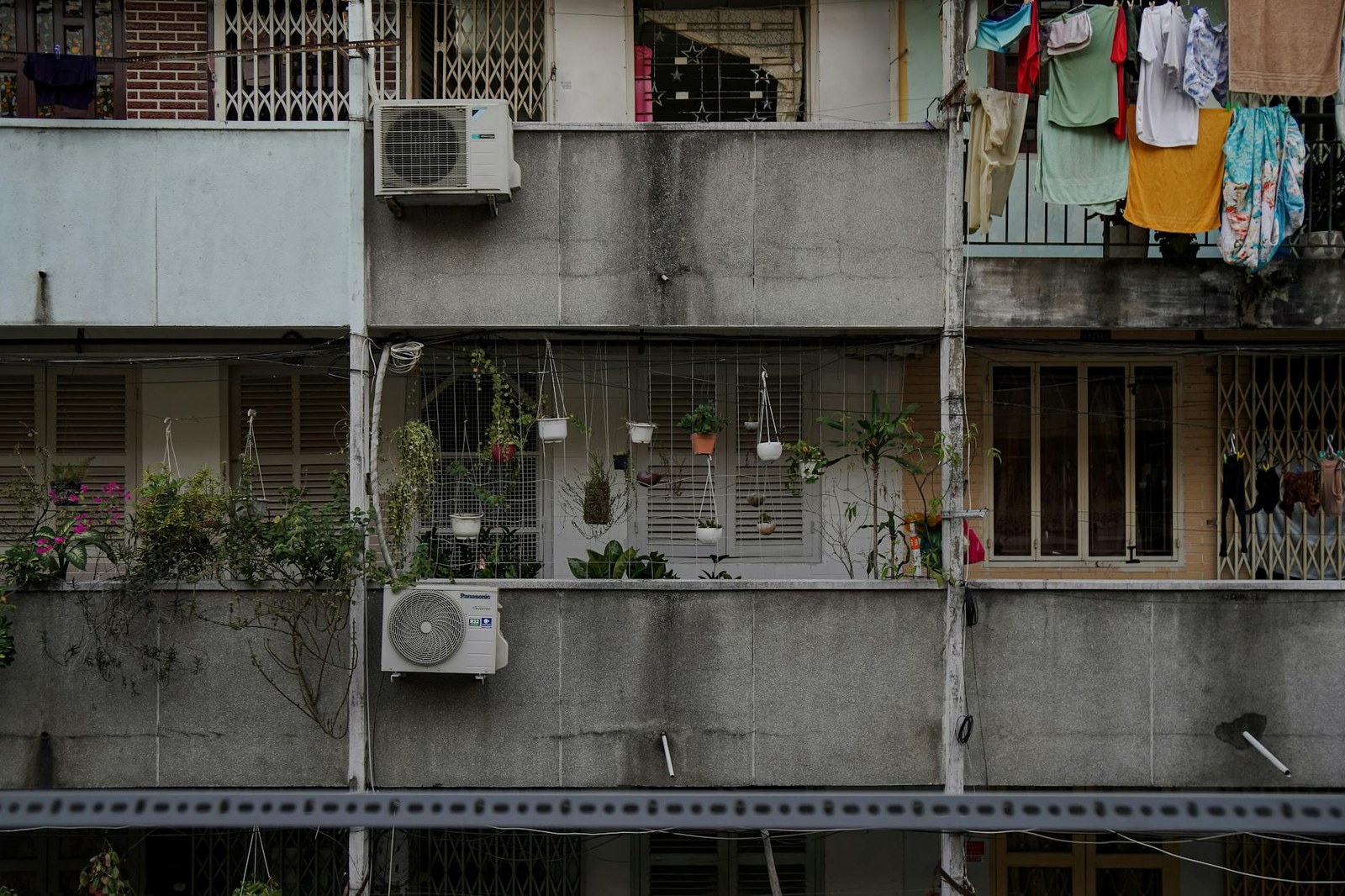
Body Corporate Strata Approval Aircon Adelaide
A split system air conditioner installation in an Adelaide strata or community-titled property needs body-corporate approval before any work starts. The reason: the outdoor unit, the line-set, the wall penetrations and (in many cases) the balcony bracket all sit on or affect common property, even if the indoor head is inside your lot. Skipping the approval is one of the few aircon decisions that can result in the system being ordered out at your cost — sometimes years later when the unit turns up at a routine common-property inspection.
This guide walks through what an Adelaide body corporate actually checks, the documentation a competent installer prepares for you, the AS 1055 acoustic limits that decide approval or refusal, and realistic timelines from quote to first cool air. It pairs with the council approval guide — strata homes also need to clear council where heritage overlays apply.
Why strata aircon installs are slower (and how to plan for it)
A standalone home install moves on the homeowner’s timeline. A strata install moves on the body-corporate’s timeline. The difference matters when:
- The committee meets monthly (or quarterly), not on demand. Your application sits in the queue until the next scheduled meeting.
- The strata manager (the company appointed to administer the corporation) needs the application in a complete, lodgement-ready form before it reaches the committee.
- Acoustic, electrical and refrigerant compliance evidence has to be attached up front — incomplete applications get returned, not asked to clarify.
- Common-property modifications often require a special resolution (75% in favour) rather than a simple majority, depending on the corporation’s by-laws.
The realistic Adelaide timeline from first enquiry to first cool air in a strata property is 6–10 weeks. A clean application, a meeting in the next 30 days, and a sympathetic install slot all align in the best case. Add 4 weeks if the next committee meeting has already filled its agenda.
Common property vs lot property — where the outdoor unit physically sits matters
The line between common property and lot property is the legal line that decides who needs to approve what. In an Adelaide community-titled or strata property:
- Lot property typically includes everything inside the unit boundaries — the indoor head, the wiring inside the wall cavity, the indoor air return.
- Common property typically includes the external wall, the eaves, the roof, the balcony substrate, the external balcony rail, and any wall penetrations to the outside. It also includes the area where the outdoor condenser sits.
Even an installation that looks “self-contained” — an outdoor unit on a lot-owned balcony, line-set running along the underside of a balcony rail, wall penetration through a lot-owned partition — almost always touches common property at the wall penetration. That single fact is what triggers the approval requirement.
The exception worth knowing about: some strata schemes have specific by-laws granting exclusive use of certain areas (a courtyard, a roof terrace) to a specific lot. In those cases, the approval pathway is shorter — but the by-law still has to permit the modification. Read the corporation’s by-laws before you assume.
The five things every Adelaide body corp asks for in an aircon application
A standard application package covers:
- Site plan or sketch showing where the outdoor unit will sit, where the line-set will run, and which walls will be penetrated. Hand-drawn is usually accepted; photographic markup is preferred.
- Manufacturer’s specification sheet for the proposed unit — sound power level, dimensions, weight, refrigerant type, capacity rating.
- Acoustic compliance statement — a signed declaration from the installer that the unit will comply with AS 1055 at the property boundary and at the nearest neighbouring lot.
- Installer credentials — ARC licence number, SA electrical worker’s licence number, ABN, current public liability certificate. The same documents covered in the ARC licensing verification guide.
- Make-good undertaking — a written statement that any common-property damage will be made good at the lot owner’s cost, including patching of wall penetrations on disposal of the unit at end of life.
A competent installer prepares this whole package as part of the quote. Asking the homeowner to assemble it themselves is one of the markers of an installer who does not do strata work regularly.
Acoustic compliance: AS 1055 noise limits and how installers prove them
AS 1055 (Acoustics — Description and measurement of environmental noise) is the standard most Australian strata corporations and councils apply to assess plant equipment noise. The headline test most apply: the unit’s sound pressure level at the receiver (typically the boundary or a neighbouring lot’s window) must not exceed 5 dB(A) above the background ambient.
In practice, a modern inverter wall-mount split system produces 48–55 dB(A) of sound power, dropping to roughly 38–45 dB(A) of sound pressure at 3 metres. For a balcony or side-yard install with 1–2 metres of standoff from the nearest neighbour, AS 1055 compliance is usually straightforward.
The exceptions:
- Multi-head outdoor units running multiple compressors at high load — louder than a single-head condenser. A 4-head or 5-head outdoor (the kind we cover in the multi-head split system guide) needs careful placement.
- Older non-inverter compressors — louder by 3–6 dB(A). Not usually a concern for new installs but relevant on like-for-like replacement.
- Condensers mounted on lightweight or hollow substrates — vibration transmission rather than airborne sound is the issue. Acoustic mounts solve it.
The installer’s acoustic compliance statement should reference the specific manufacturer sound data and the proposed install distance to the nearest neighbouring receiver.
Drainage, line-set routing and façade penetrations — the three veto points
These are the issues that cause body-corporates to refuse applications, in order:
- Drainage path. The condensate from the indoor unit has to go somewhere — typically a P-trap to a stormwater grate, or an inline pump if gravity drainage isn’t available. Refusal happens when the drain path discharges onto a balcony floor below, or into a planter box, or onto a common-property tile that will eventually stain.
- Line-set routing. The line-set (the insulated copper pair carrying refrigerant between indoor and outdoor units) must run discreetly. Strata committees veto runs that cross the building façade in visible areas; they accept runs behind balcony balustrades or inside line-set covers painted to match the external wall.
- Façade penetrations. The penetration through the external wall is a common-property modification and a potential leak point. Most committees require either silicone-and-sleeve weatherproofing or a manufactured wall-penetration kit. The make-good undertaking covers what happens at end of life.
Each of these has to be addressed in the application package. Vague answers (“the installer will sort it on the day”) get applications returned.
Sample approval letter (what to include so it’s accepted first time)
A first-pass acceptable application reads roughly as:
Dear Strata Committee, I am writing to apply for approval to install a [model] split system air conditioner at Lot [X], [address]. Attached are: (1) site plan showing outdoor unit location on the [eastern/western] side of the balcony; (2) manufacturer specification sheet (sound power level [Y] dB(A)); (3) acoustic compliance statement from [installer], ARC licence [Z]; (4) installer credentials including SA electrical licence and public liability; (5) make-good undertaking. The work will be performed by [installer], proposed dates [dates]. I undertake to maintain the unit annually and to make good any common-property modifications at end of life at my cost.
Most Adelaide strata managers (Strata Community Association SA members are the typical set — see sca.com.au) provide a template form. Use the template if one is offered; it shortens the assessment.
Realistic timelines: from quote to first cool air in a CBD apartment
A clean run looks roughly like this in an Adelaide CBD apartment aircon installation or North Adelaide installation:
- Week 1: site assessment by installer, application package prepared.
- Week 2: application lodged with the strata manager.
- Week 3–4: strata manager reviews completeness, queues for next committee meeting.
- Week 4–6: committee meeting, decision issued.
- Week 6–8: install scheduled (subject to installer slot availability).
Faster paths exist — some corporations grant the strata manager delegated authority to approve standard installs without a committee meeting. Slower paths exist too — heritage-overlay buildings often require council DA on top of body-corp approval, adding 4–8 weeks. The council approval guide covers the council overlay.
What happens if you install without approval and the strata committee finds out
Three typical outcomes:
- Order to remove. Most corporations have by-laws empowering them to issue a notice requiring the unit to be removed, the wall penetration patched, and the common property restored to original condition — at the lot owner’s cost.
- Retrospective application required. Some committees will accept a retrospective application, particularly if the install is acoustically and visually compliant. Expect a higher application fee and a punitive levy in some schemes.
- Resolution of dispute through SACAT. If the committee orders removal and the lot owner refuses, the matter ends up at the South Australian Civil and Administrative Tribunal. SACAT has consistently upheld committee orders on unauthorised plant equipment.
The cost-benefit is one-sided. The approval process is administrative friction, not a meaningful obstacle for a competent installer. The cost of installing first and asking later is the original install cost plus removal plus reinstall — typically a $4,000–$7,000 mistake on a $5,500 multi-head split.
Frequently asked questions
Do I need body-corp approval to install an aircon in an Adelaide apartment? Yes — almost always. The wall penetration and the outdoor unit location both touch common property, even on a lot-owned balcony. The few exceptions are by-laws granting exclusive-use rights for plant equipment, which are uncommon.
Can the strata committee actually refuse my aircon application? Yes. The grounds typically given are acoustic non-compliance, visual amenity (visible line-sets across a façade), drainage onto common property, or insufficient installer credentials. A clean application with the five documents listed above clears almost every refusal ground.
How loud can my outdoor unit be in an Adelaide strata complex? The standard reference is AS 1055 — the sound pressure level at the boundary or nearest neighbouring receiver should not exceed 5 dB(A) above background ambient. A modern inverter split-system condenser at 1–2 m standoff comfortably meets that test. Multi-head condensers at high load need closer attention.
Whose insurance covers a leak that damages the unit below mine? The lot owner’s home and contents insurance typically covers consequential damage from their own plant equipment, provided the install was lawful and the maintenance current. The strata corporation’s building insurance may also respond, depending on the scheme. Skipping body-corp approval often voids both.
How long does body-corp approval typically take in Adelaide? 4–8 weeks from a complete application to a decision — driven mostly by the gap between the application date and the next committee meeting. Allow 6 weeks before your intended install date as a working baseline.
Can I install a portable aircon without strata approval? Yes — a self-contained portable unit (window-vent or single-hose) doesn’t penetrate common property and doesn’t require approval. Most committees still appreciate a courtesy notification if the unit is visible from common areas. Performance is a long way short of a fitted split, but it’s a useful interim option while the approval process runs.
Ready for a written quote that includes the strata application package?
Submit the quote form — the trusted Adelaide installer who does strata work regularly, with the application package prepared as part of the quote at no extra cost. Strata-experienced installers cut weeks off the timeline.